
On Friday, September 25, 2026, our Headshots of DFW team photographed official NBA headshots for the Dallas Mavericks during the team’s media day in Dallas. Those headshots are used for player and coach profiles, NBA.com, lineup graphics and television broadcast graphics.
The photographs in this post were taken behind the scenes. They show the working side of the assignment: a portable studio on a basketball court, with other crews, lights and equipment sharing the floor around it. Much of what they show also applies to the onsite headshots Dallas companies schedule for leadership teams, sales meetings and conferences.
Building a Professional Headshot Studio On Location
The studio was straightforward: a seamless blue backdrop, a large umbrella light on each side of the subject, a consistent camera position and a laptop at the edge of the set.
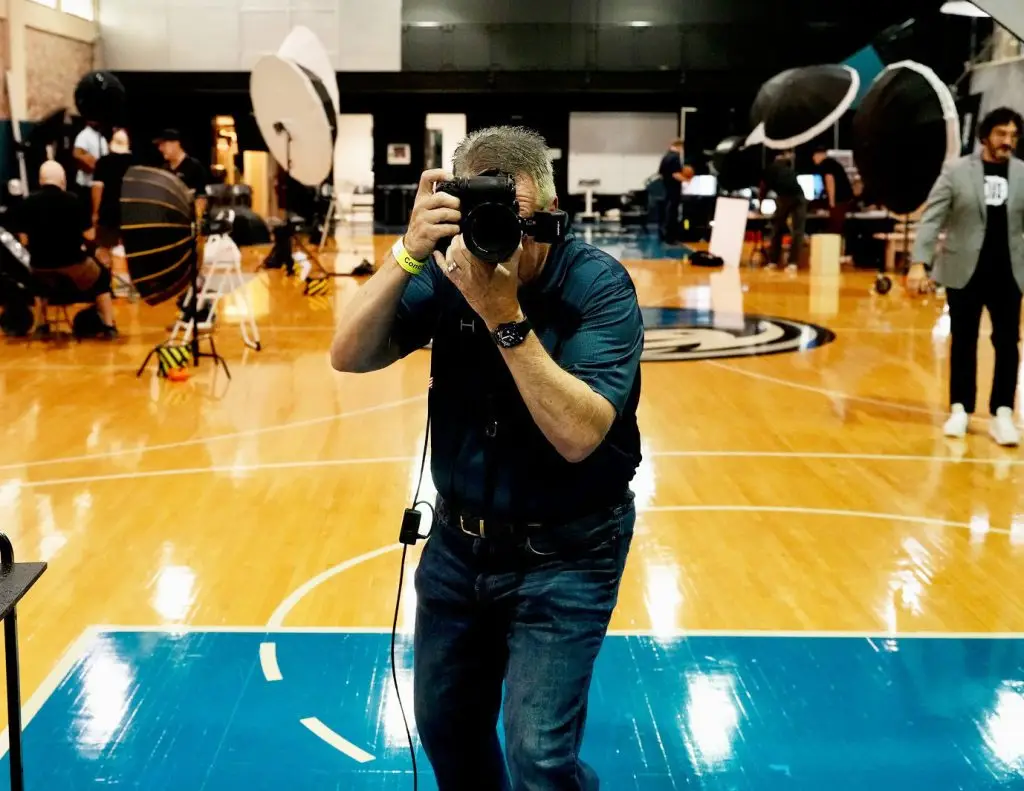
The photograph above shows how much else was happening on that court. Behind the photographer are other lighting setups, umbrellas, light stands, tables and people working on different parts of the day. Our backdrop, lights and camera position were set up alongside the other production areas on the court.
In a set of NBA headshots, lighting, framing and camera height have to hold from one player to the next, because the images are seen together on roster pages and in lineup graphics. That consistency depended on the lighting, backdrop and camera position staying controlled even with other production activity happening around the set.
Keeping People and Photographs Organized
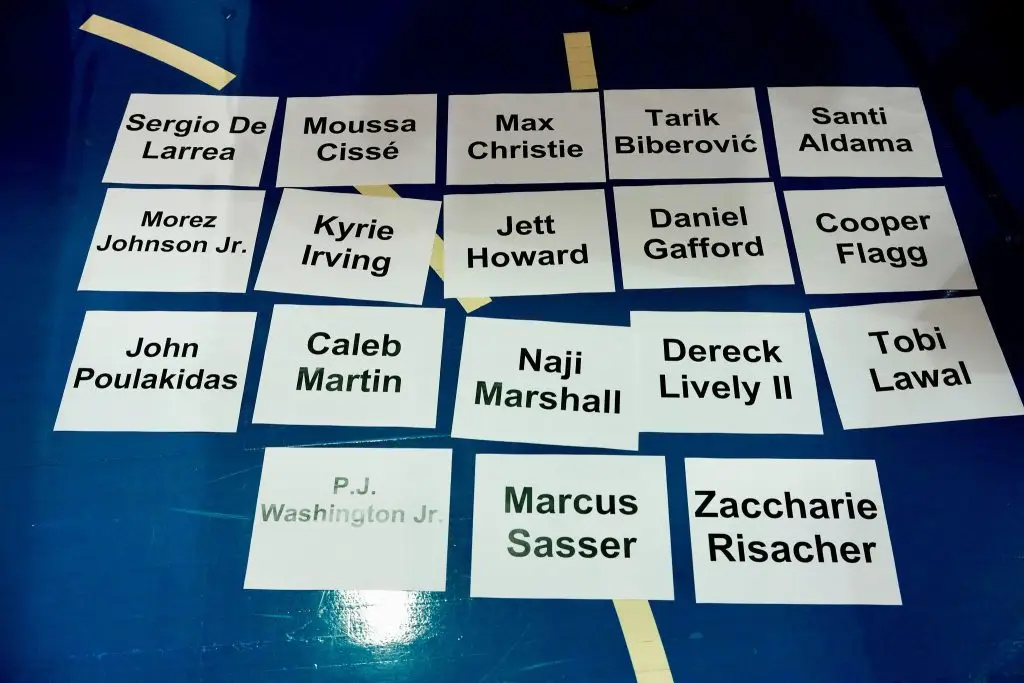
Printed name cards for the players were laid out in rows and taped to the court floor, each name in large type. In the photograph below, a player holds his card in front of the backdrop, so his name and face appear in the same frame.
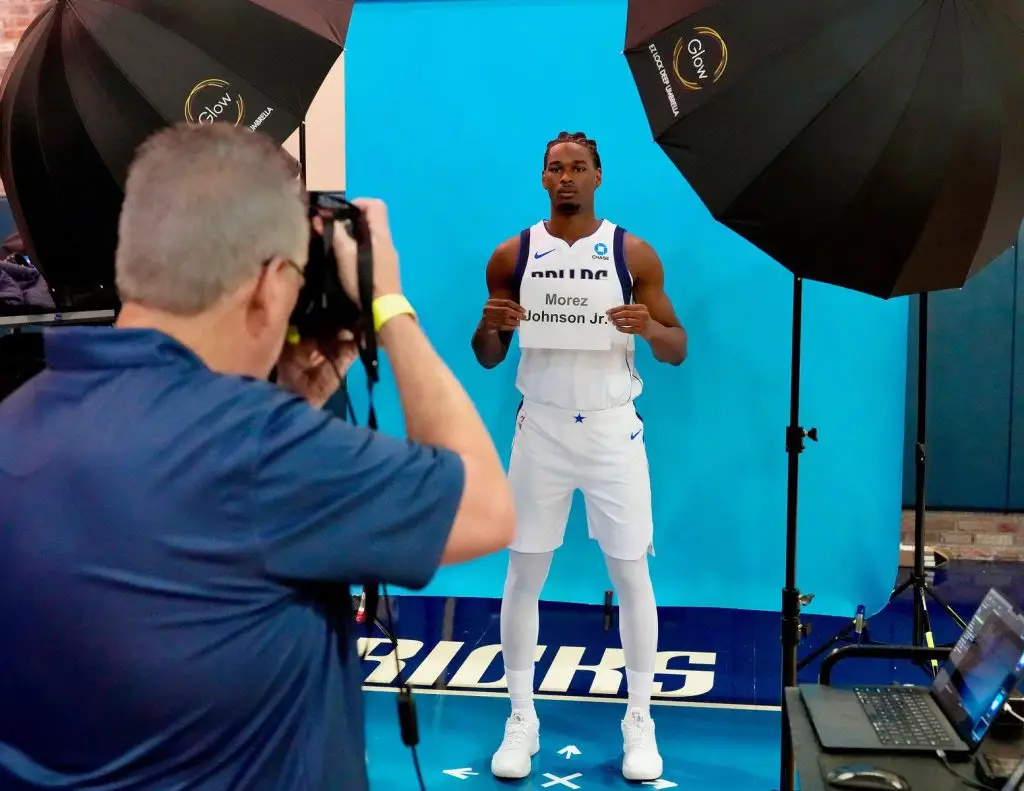
Every headshot has to be matched to the right person before a team’s media staff can use it. Errors are easy to make and hard to catch later, particularly when a group is dressed alike and photographed against one backdrop. Keeping identification close to the camera is one of the less visible parts of high-volume headshots.
Company headshot days and conference event headshot stations call for the same discipline, even if the names come from a registration list or a check-in table instead of cards on the floor.
Direction Matters Even When Time Is Limited
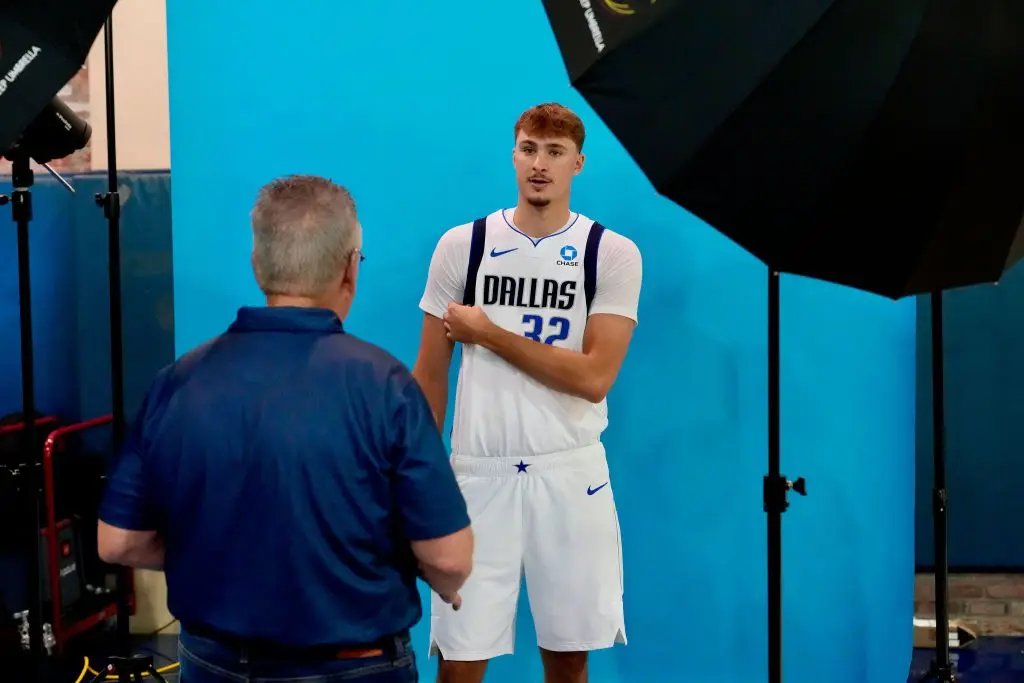
Here the photographer is not behind the camera. He is standing on the set, talking with a player in a number 32 jersey.
Media day runs on a full schedule, and a headshot is one of several stops for each player. Direction has to be clear and simple enough that a handful of frames produces an image that fits with the rest of the set. Much of that happens in brief, direct conversation like the one in this photograph rather than in instructions called out from behind the lens.
Whether the subjects are athletes or executives, people photographed on a tight schedule respond to direction that is specific and quick, from a photographer who does not waste their time.
Working Inside a Busy Media Environment
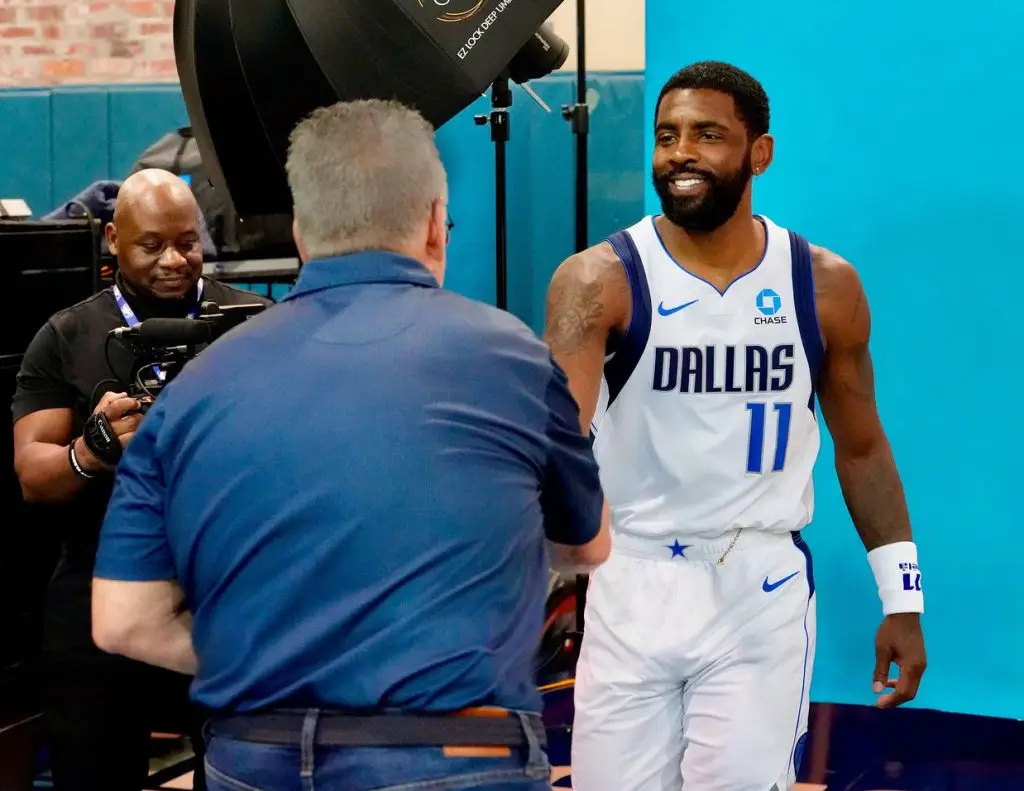
Our set was one station among several on the court. In the photograph above, a videographer films nearby as a player in a number 11 jersey greets the photographer, with light stands and equipment filling the edges of the frame.
Other crews were working nearby with their own cameras, lighting and production equipment. Working in that kind of space means keeping equipment within a defined area, keeping stands and cables clear of walkways, and moving people on and off the set without holding up anyone else’s work.
That is familiar ground for us. At conferences and company events, our corporate event photography takes place inside a program someone else controls, alongside AV teams, registration, catering and speakers working to their own timing. That experience shapes how we plan headshot stations at events: where they sit, how much room they need and how attendees reach them without interrupting sessions.
Bringing the Same Approach to Corporate Events
A corporate event has a different audience and different goals than a professional sports media day. What carries over is the practical work: a studio built to fit the space available, consistent lighting and framing from the first person to the last, reliable identification for every subject, and direction that works in a few minutes.
That applies to corporate headshots for executives and staff, and to onsite professional headshots at:
- Conferences and conventions
- Annual meetings
- Sales meetings and kickoffs
- Leadership meetings and retreats
- Company-wide events
- Employee headshot days
- Association events
Many of these events call for both kinds of photography. Grapevine Photo can photograph the program itself, including keynotes, networking and award presentations, while a headshot station runs at the same event. Our Dallas corporate event photography page describes that coverage in more detail. If you are still comparing photographers, How to Choose a Corporate Event Photographer in Dallas covers the questions to ask before you book.
Planning an Event or Headshot Program in Dallas–Fort Worth?
If you are planning an event or a company headshot program in Dallas–Fort Worth, we can help you work out the space, schedule and headshot station setup needed for the number of people you expect.